How to Use Analogous Colors to your Design Advantage
Color trends will come up and become, but certain facts virtually colour combinations will remain true forever. One of these facts is that analogous colors are a lasting source of colour harmony in design and will wait well together, forever and always amen. For those who might be wondering, an analogous colour scheme is a grouping of three colors that sit next to each other on the color wheel. One of the colors tends to be dominant, such as a primary color. This article will show multiple means in which analogous colors can be used to your design advantage, regardless of the specific color scheme.
 View in gallery
  View in gallery
 Incorporating a unmarried textile with coordinating colors might be plenty to contain the color harmony sensibility into your infinite. This strategy is particularly effective when paired with a painted wall of the ascendant color. (And beautiful glass bulb lighting pendants can never be wrong!)
 View in gallery
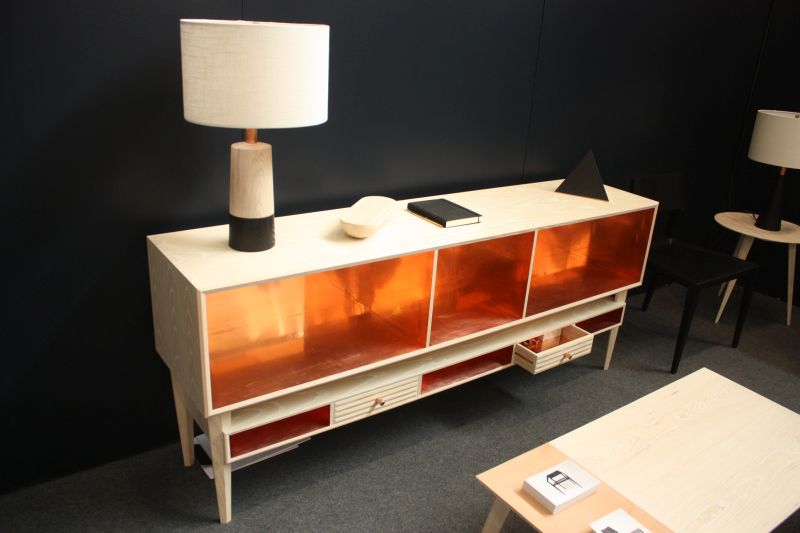
 An analogous color scheme can be integrated into a space merely using shiny metallic surfaces and lighting. The reflective properties of this amusement center's interior walls, for case, bring out golden yellow, orange, and a burnt sienna. The outcome is colorfully and energetically neutral.
 View in gallery
 If y'all're feeling a niggling unsure of how to go near it, bedrooms are an excellent identify to practice with using an analogous color scheme. This is in function because the sleeping accommodation is a individual space (and then y'all don't take to worry nigh how it looks to anyone but yourself), and in part because all the layers on the bed brand information technology relatively piece of cake to incorporate the 3 coordinating colors in distinct proportions.
 View in gallery
 Recollect outside the box when considering your analogous "colors." If you're by and large drawn more toward neutral hues, there'south notwithstanding ample opportunity to utilise the inherent color harmony of analogous colors. In this sleeping accommodation setting, the colors are deeper than similar analogous color groupings. For example, the brownish woods tones tin can be related to orange. The brass vase compares to yellow, and the grey-greenish of the walls is like a light-green.
 View in gallery
 An undeniably fun way to incorporate coordinating colors into pattern is to option a large statement piece, such as a living room exclusive, and represent the color scheme on that piece itself. If the furniture itself tin can't plough analogous, consider incorporating large pillows in solid coordinating colors for a similar effect.
 View in gallery
 A cute style to celebrate analogous colors in a space is to incorporate a complementary colour or two with the analogous scheme. This strategy brings out the best in every color present while even so maintaining balance and color harmony. (Plus, it's just a beautiful print.)
 View in gallery
 Red, fuchsia, and plum are color bike neighbors and, as such, make a vibrant and sensual colour scheme for the sleeping accommodation. Just because analogous colors are incorporated into a space's design doesn't mean those are the ONLY colors possible, however. The pop of yellow here is perfection, every bit a complementary color to purple and a bright spot amongst rich precious stone tones.
 View in gallery
 In this java table arrangement, dark-green is the colour of option. Specifically, the 3 distinct shades of green – olive, spring, and mint – read equally analogous colors because of their proximity on the color bicycle due to warm/cool shading variations.
 View in gallery
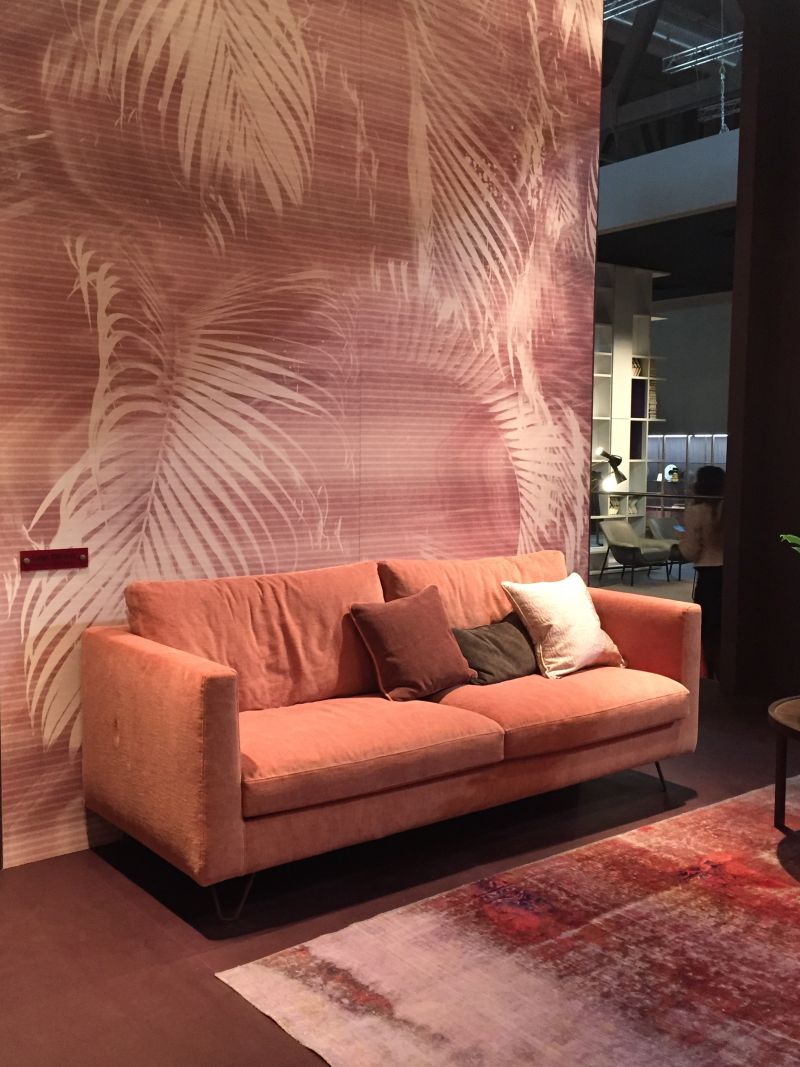
 In a monochromatic infinite, upon closer inspection, one will oftentimes discover the strategic use of analogous colors to bring depth and visual entreatment. Notice the throw pillows on this salmon sofa, forth with the subtle variations of the hue on the wall and rug. In other words, analogous colors can be just as effectively introduced to a space on a small calibration equally a large one.
 View in gallery
 Maintaining a like tone or tint inside the coordinating colour scheme is important when the colors have lots going on otherwise. A consistent feel and coherent blueprint scheme is more easily accomplished with this strategy, especially when diverse patterns or textures are being used.
 View in gallery
 Designer lighting is a unique and fantastic way to bring a touch of analogous color scheming to your space. These Marset wall sconces, for example, utilize light gradations and depth of design to create a stunning analogous event.
 View in gallery
 For those on the braver, or bolder, or more eclectic side of the blueprint spectrum, y'all might consider looking outside the proverbial analogous colored box for your décor. You may exist drawn to this interesting combination of a decidedly analogous pattern with other patterns that only have a trace of i or 2 of the analogous colors. Information technology all works together because of the colour relationships.
 View in gallery
 Coordinating colors can be as casual and lighthearted as annihilation, depending upon their use and medium. These woven ottoman-stools, for example, using rainbow and coordinating nylon flat rope, are beachy and familiar and colorfully comfy in their affinity.
 View in gallery
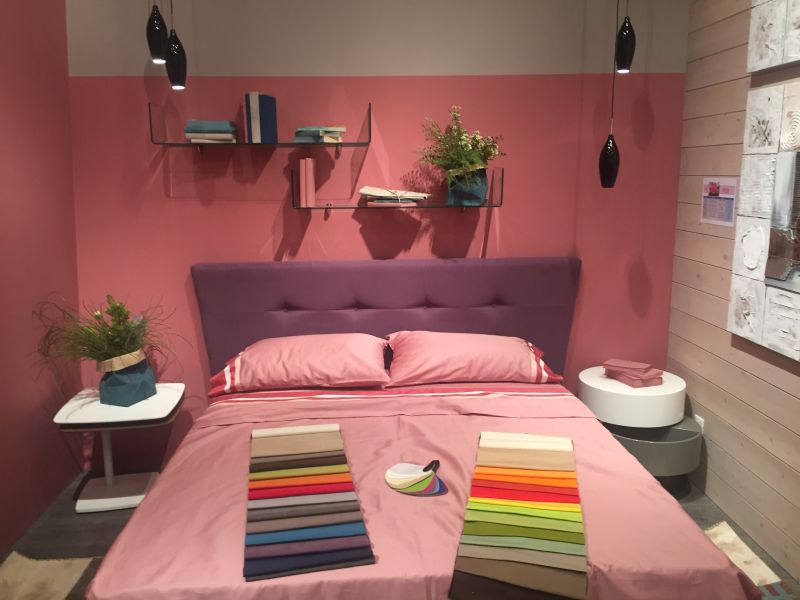
 Another strategy to maximize your blueprint potential with analogous colors is past opting to use large, mesomorphic doses of analogous colors (eastward.g., the walls, headboard, and solid bedding here) and then breaking up the infinite with smaller, neutral pieces and details. This helps the colour scheme to reign supreme in the space…without taking itself too seriously.
 View in gallery
 Another mode to wait at analogous colors is through a sort of ombre slope. Any kind of nesting pieces, such as these stackable stools, that are an ombre sort of surface, give off an analogous vibe. This is useful for when you want pieces in your space to coordinate merely not necessarily lucifer.
 View in gallery
 Don't hesitate to treat metal materials equally a key component in your analogous scheme, if it works in your favor. The chair's base here plays a key function in joining the color of the upholstery with that of the flooring.
 View in gallery
 Consider all parts of the infinite as options for working in the analogous colour palette. This dyed stripe rug in light blue and navy, for example, are a perfect foundation for the analogous coloring with indigo furniture upholstery/padding. The pieces juxtapose each other's style nicely – one being freehanded and loose, the other beingness more somber and structured.
 View in gallery
 If yous only beloved the depth and feel of an analogous color combination but don't quite know how to carve out space to incorporate it, you can get with simple side accessories. Notice a single shelf, for example, and layer your colour variations on the shelf; items of similar content, material, shape, and/or size work well when the colors are dissimilar.
 View in gallery
 Here is another example of where monochromatic design – in this chamber that capitalizes on the use of grey décor, for case – combines an ombre effect with coordinating color use to maximize a cohesive, visually pleasing space. Warmer and libation versions of the ascendant colour assist to provide balance here.
Source: https://www.homedit.com/analogous-colors/
0 Response to "How to Use Analogous Colors to your Design Advantage"
Postar um comentário